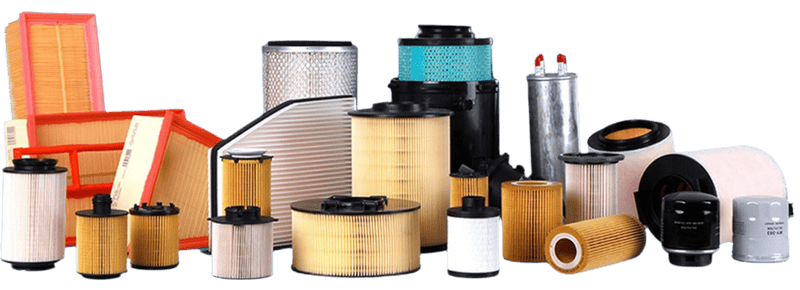
Engine Air Filter Media: Cellulose vs Synthetic vs Composite – Complete Buyer’s Guide
Engine air filter media comes in three primary grades: Cellulose (entry-level economy, 95–98% efficiency @ 10μm, 20k–30k km life), Composite Blend (balanced mid-tier, 98–99% efficiency @ 5–10μm, 30% longer life), and Synthetic (premium heavy-duty, 99%+ efficiency @ 5μm, up to 50k km life). While cellulose fits standard passenger cars, composite blends offer the best margin-to-performance ratio for general aftermarket distributors, and synthetic is required for heavy-duty, high-dust off-highway environments
For wholesale distributors, fleet managers and repair chain buyers, the quality of engine air filter media is the single biggest factor determining real-world filter performance. Two filters with identical dimensions can have wildly different service life, efficiency and engine protection — all because of the raw filter paper material inside.
This guide breaks down the three most common air filter paper types: cellulose, synthetic and composite blends. We deliver a full automotive filter media comparison covering filtration efficiency, dust holding capacity, service life and best-use cases, so you can select the right grade for your customer base and operating conditions. As an experienced automotive filter paper manufacturer, we also share the industry-standard quality tests that separate reliable media from low-cost alternatives.
1. Why Air Filter Media Directly Impacts Filter Performance
The engine air filter’s job is to trap dust, sand, pollen and airborne debris before it enters the combustion chamber. The filter media itself does 100% of this work; the housing, seal and frame only serve to hold it in place and prevent bypass leaks.
Three core metrics define media performance:
- Filtration efficiency: What percentage of particles at a given size are captured.
- Dust holding capacity: Total mass of contaminants the media can hold before reaching maximum restriction.
- Initial airflow restriction: How much the media reduces airflow when clean.
A good filter balances all three: high efficiency, high dust capacity and low airflow restriction. Cheap filter paper often sacrifices one or more of these to reduce cost, leading to premature clogging, reduced engine power and increased engine wear.
For a breakdown of warning signs caused by degraded filters, see our guide to bad or clogged engine air filter symptoms.
2. Cellulose Air Filter Media: Standard Economy Grade
Cellulose media is the most widely used material for passenger car and light commercial engine air filters. It is made from refined wood pulp fibers, and most commercial grades are produced as resin impregnated filter paper for improved stiffness and water resistance.
Core Characteristics
- Typical published reference range: 95–98% capture rate for particles ≥10 μm (verify against batch ISO 5011 report for specification-grade sourcing).
- Service life: 20,000–30,000 km under normal driving conditions
- Key advantages: Low cost, good stiffness for pleat formation, widely available and proven in decades of automotive use
- Limitations: Lower efficiency for fine sub-5 micron particles; can degrade faster in high-humidity or high-dust environments
Best Applications
- Standard passenger cars and daily driver vehicles
- Normal highway and urban driving conditions
- High-volume budget aftermarket replacement segments
- Cost-sensitive fleet and repair programs
Most original equipment entry-level filters use cellulose media, as it provides reliable protection for normal driving at an affordable price point.
3. Synthetic Air Filter Media: Premium High-Performance Grade
Synthetic media is made from man-made fibers such as polyester, polypropylene or glass fiber, engineered to create a more uniform and finer pore structure than cellulose. It is the standard high performance air filter media for heavy-duty and industrial applications, and is also the base material for most industrial air filter paper used in construction and mining equipment.
Core Characteristics
- Typical published reference range: 99%+ capture rate for particles ≥5 μm (verify against batch ISO 5011 report for specification-grade sourcing).
- Service life: 30,000–50,000 km, up to 50% longer than cellulose
- Key advantages: Higher fine-particle filtration, greater dust holding capacity, better moisture resistance, more stable performance across temperature ranges
- Limitations: Higher material cost; requires more advanced manufacturing equipment
Synthetic media works by using layered fiber structures: coarser upstream layers capture large particles, while finer downstream layers trap fine contaminants. This graded structure maximizes dust holding capacity while maintaining low airflow restriction.
Best Applications
- Heavy-duty commercial trucks and construction equipment
- High-dust and off-road operating environments
- High-performance and modified engines
- Premium aftermarket and OEM replacement programs
For heavy-duty industrial and off-highway equipment, synthetic media delivers significantly longer service intervals and better engine protection than standard cellulose.
4. Composite / Blend Air Filter Media: Balanced Mid-Tier Grade
Composite (also called blended) media combines cellulose fibers with synthetic fibers, typically in a 70/30 or 60/40 ratio. It is designed to deliver most of the performance benefits of synthetic media at a price point closer to cellulose.
Core Characteristics
- Typical published reference range: 98–99% capture rate for particles 5–10 μm (verify against batch ISO 5011 report for specification-grade sourcing).
- Service life: 25,000–40,000 km, roughly 30% longer than pure cellulose
- Key advantages: Better efficiency and moisture resistance than cellulose; lower cost than full synthetic; good pleat rigidity and manufacturing compatibility
- Limitations: Does not match the extreme performance of full synthetic media in the harshest conditions
The core blended filter media advantages lie in its cost-performance ratio: it closes 70–80% of the performance gap between cellulose and full synthetic, at only 20–30% higher cost than standard cellulose. Many mid-tier OEM and aftermarket programs use blended media as a step-up option.
Best Applications
- Mid-premium passenger and light commercial vehicles
- Mixed driving conditions with moderate dust exposure
- Distributors looking for a high-margin upgrade option
- Fleets seeking extended service intervals without full synthetic cost
5. Side-by-Side Performance Comparison
The table below summarizes the full automotive filter media comparison across all three material types, to help you quickly match grades to your customer needs.
| Performance Metric | Cellulose Media | Composite / Blend Media | Synthetic Media |
|---|---|---|---|
| Efficiency @ 10μm | 95–98% | 98–99% | 99%+ |
| Efficiency @ 5μm | 70–80% | 85–90% | 95–98% |
| Relative Dust Holding Capacity | 100% (baseline) | 130–150% | 180–220% |
| Typical Service Life | 20,000–30,000 km | 25,000–40,000 km | 30,000–50,000 km |
| Moisture Resistance | Fair (resin treated) | Good | Excellent |
| Relative Material Cost | Low (baseline) | Medium | High |
| Best For | Normal road driving | Mixed conditions | Heavy duty / high dust |
6. How to Choose the Right Media Grade for Your Business
When evaluating cellulose vs synthetic filter media for your inventory, match your selection to your customer base and local operating conditions.
For General Passenger Car Aftermarket
Stock cellulose as the base economy SKU and composite blend as the premium upgrade option. This covers price-sensitive buyers while offering a higher-margin upsell for customers wanting longer service life.
For Commercial & Heavy-Duty Fleets
Prioritize synthetic media for construction, mining and off-highway equipment. For on-highway trucks, composite blend is often the most cost-effective choice for normal duty cycles.
For Performance & Tuning Segments
Offer high-flow synthetic media products designed for maximum airflow while maintaining filtration efficiency. Avoid low-quality “high flow” filters that sacrifice filtration for airflow numbers.
For High-Humidity / Coastal Markets
Upgrade from standard cellulose to resin-impregnated cellulose or composite media. Untreated cellulose loses structural integrity and filtration performance when exposed to sustained high humidity.
All three media grades are available in our full engine air filters catalog, with custom media formulations available for OEM and private label programs.
For Distributors: Buket Auto Parts is an IATF 16949 certified manufacturer producing engine air filters in cellulose, composite and full synthetic media across 1,300+ OE-reference applications. Private-label programs and specified media formulations are available with complete batch-level ISO 5011 test documentation and cross-reference support for major European and Japanese vehicle platforms.
7. Quality Testing Standards for Filter Media
Low-cost suppliers often advertise impressive-sounding air filter media efficiency rating numbers without actual test data. When evaluating a filter media supplier, verify these standard tests.
- ISO 5011 Filtration Efficiency Test
The industry-standard test for air filter performance, measuring efficiency and dust holding capacity under controlled laboratory conditions. Always request test data for the exact micron size you care about, not just a general “high efficiency” claim. - Pleat Stiffness & Burst Test
Verifies that the media maintains its pleat structure under airflow pressure and vibration. Collapsed pleats drastically reduce effective filtration area and service life. - Water Repellency & Humidity Aging Test
Critical for humid and coastal markets. Quality media is treated with water-repellent resin to maintain performance in damp conditions. - Temperature Cycling Test
Verifies the media does not degrade or shrink under repeated hot-cold temperature cycles typical of engine bay environments.
As a vertically integrated automotive filter paper manufacturer, Buket controls every step from raw pulp formulation to finished filter assembly, with full batch test documentation available for all wholesale and OEM orders.
Frequently Asked Questions
Q: Is synthetic air filter media always better than cellulose?
Not necessarily. For normal on-road driving at standard replacement intervals, cellulose provides adequate protection at a lower cost. Synthetic delivers clear benefits in heavy-duty, high-dust or extended-interval applications, but it is overkill for many light-duty passenger car use cases.
Q: Can I upgrade from cellulose to synthetic media in the same filter housing?
Yes, as long as the filter dimensions and sealing are identical. Upgrading media grade is a common way to improve performance without modifying the intake system. Always confirm the filter meets OEM airflow requirements.
Q: How much longer does synthetic media last?
Under normal driving conditions, synthetic media typically lasts 30–50% longer than cellulose. In high-dust environments, the difference can be even larger — sometimes double the service life.
Q: What is resin-impregnated filter paper?
Resin-impregnated cellulose is standard grade paper treated with phenolic resin to increase stiffness, water resistance and temperature tolerance. It is the most common type of cellulose media used in modern automotive air filters.
Final Recommendation
When comparing cellulose vs synthetic filter media for wholesale inventory, the optimal strategy for most distributors is a three-tier approach:
- Entry tier: Standard resin-treated cellulose for price-sensitive volume segments
- Mid tier: Composite blend media as the recommended upgrade for most customers
- Premium tier: Full synthetic media for heavy-duty and performance applications
This structure covers all customer segments while creating clear upsell paths and higher profit margins on premium grades.
Source Engine Air Filters With Verified Media Performance
Buket Auto Parts manufactures engine air filters in cellulose, composite and synthetic media grades for over 1,300 vehicle applications. All our media is tested to ISO 5011 standards and produced under IATF 16949 quality management systems. We also supply raw automotive filter paper for filter manufacturers and industrial clients.