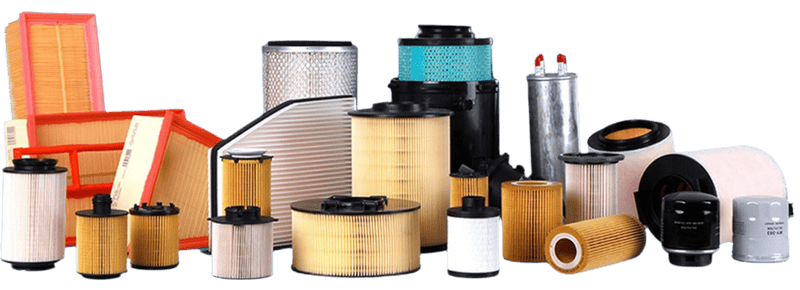
For auto parts distributors, repair chains, and private label brands, sourcing reliable wholesale oil filters goes far beyond matching part numbers. The filter structure, raw material consistency, and quality verification directly impact customer satisfaction, warranty claims, and your long-term brand reputation.
1. Main Types of Auto Oil Filters for Wholesale Inventory
Oil filters are not one-size-fits-all. Engine architecture, oil viscosity, and service intervals dictate filter requirements. Understanding the three primary categories helps optimize inventory layout for local markets.
1.1 Spin-On Oil Filters
Spin-on canister filters remain widely used across Asian, American, and legacy European passenger cars and light commercial vehicles. They feature an integrated housing containing the filter element, anti-drain back valve, bypass valve, and heavy-duty steel casing in a single disposable unit.
- Key advantages: Quick installation without specialized tools, pre-lubricated outer seal, complete housing replacement during each maintenance cycle.
- Best for: High-volume aftermarket distribution, fast-fit service networks, high-turnover SKUs.
- Market coverage: Most Asian, American, and pre-2015 European vehicle applications.
1.2 Cartridge Oil Filter Elements (Eco Filters)
Cartridge-style oil filters consist strictly of the pleated filter media element, end caps, and replacement O-rings. The element fits inside a permanent housing mounted directly on the engine block.
- Key advantages: Reduced plastic/metal environmental waste, lower replacement unit cost, compact freight footprint for international sea shipping.
- Best for: Modern European vehicles, premium passenger car fleets, eco-friendly maintenance programs.
- Market trend: Rapid growth segment as Euro 6/Euro 7 standards incentivize lightweight, eco-friendly cartridge designs.
1.3 Heavy-Duty Diesel Oil Filters
Engineered for commercial trucks, agricultural machinery, and heavy industrial diesel engines, these filters feature expanded media surface areas, reinforced steel housings, and ultra-high dirt-holding capacity.
- Key advantages: Exceptional dust-holding capacity, high structural burst resistance, extended drain intervals up to 30,000–50,000 km.
- Best for: Fleet operators, heavy machinery dealers, commercial transport distributors.
| Filter Type | Primary Application | Typical Service Life | Inventory Priority |
|---|---|---|---|
| Spin-On Oil Filter | Passenger cars, light trucks | 8,000 – 15,000 km | High (fast turnover) |
| Cartridge Oil Filter | Modern European & premium cars | 10,000 – 20,000 km | High (rapidly growing) |
| Heavy-Duty Diesel Filter | Commercial trucks, off-highway machinery | 20,000 – 50,000 km | Medium (high margin niche) |
2. Core Oil Filter Materials & Media Grades
Filter media is the heart of any oil filter, and material quality directly impacts filtration performance and service life. Reputable automotive oil filter manufacturers offer three main media grades to match different use cases.
2.1 Filter Media Types
Cellulose Filter Media (Standard Grade)
Manufactured from resin-impregnated wood pulp fibers, cellulose is the standard economical media. It performs reliably for standard oil-change intervals but features lower capture efficiency for microscopic particles.
- Filtration efficiency: ~95% at 20–25 microns
- Best for: Conventional mineral oils, standard service intervals, entry-level aftermarket channels.
Synthetic Blend Media (Mid-to-High Grade)
A hybrid media combining natural cellulose with synthetic glass/polyester fibers. Synthetic blend media delivers superior resistance to high temperatures, lower flow resistance, and increased particle retention capacity.
- Filtration efficiency: ~98% at 15–20 microns
- Best for: Synthetic oil blends, extended service intervals, commercial transport fleets.
Micro-Glass / Full Synthetic Media (Premium Grade)
Constructed entirely from microscopic glass fibers supported by synthetic backing meshes. Full synthetic media offers the lowest restriction to oil flow during cold starts and the maximum particle trapping capability.
- Filtration efficiency: 99%+ at 10–15 microns
- Best for: 100% full synthetic oils, heavy-duty commercial engines, extreme temperature markets, OEM programs.
2.2 Structural Component Integrity
Beyond filter media, component materials determine long-term reliability under harsh engine conditions:
- Steel Casing & Center Tube: Prevents collapse under high pressure; thickness should be 0.4–0.8mm for passenger car filters
- Nitrile Rubber (NBR) Gaskets: Oil-resistant elastomeric seals ensuring leak-free seating across normal operating temperatures.
- Silicone Anti-Drain Back Valves: Retains elasticity in cold weather, preventing dry dry-start engine wear (superior to standard NBR valves).
- Metal End Caps & Thermosetting Glue: Ensures structural stability and prevents oil bypass through media seams, outperforming cheap cardboard alternatives.
3. Critical Quality Tests for Wholesale Oil Filters
Budget filter factories often cut costs by skipping essential batch testing. When qualifying a long-term supply partner, verify that they test production samples against these recognized industry benchmarks:
3.1 Filtration Efficiency & Capacity Test (ISO 4548-12 / ISO 16889)
The ISO 4548-12 standard (methods of test for full-flow lubricating oil filters for internal combustion engines) is the global benchmark for measuring filtration efficiency (Beta ratio) and total contaminant holding capacity using multi-pass particle counting.
- What it measures: Exact particle retention percentage across various micron sizes (e.g., 10, 15, 20 microns) and total dust capacity.
- Red Flag: Suppliers who claim “99% efficiency” without providing supporting laboratory test reports or specified micron parameters.
3.2 Static Burst Pressure & Cold-Start Fatigue Test (ISO 4548-5)
Simulates severe pressure spikes (such as cold morning engine ignitions when oil viscosity is high) to verify housing structural strength.
- Standard Requirement: Minimum 10–15 bar static burst pressure for passenger car spin-ons; 20–25+ bar for heavy-duty commercial filters.
- Impulse Fatigue Test: Cyclical pressure testing (e.g., 0 to 8 bar over 50,000+ cycles) to verify casing and seam durability.
3.3 High-Temperature Aging & Chemical Resistance
Filters are submerged in hot engine oil for prolonged periods to confirm media, adhesives, and rubber seals do not harden, crack, or degrade under chemical stress.
- Standard Test Condition: 100+ continuous hours at 120°C–140°C.
- Validates: Anti-drain back valve flexibility, center tube adhesive bonding, and gasket resilience.
3.4 100% Inline Pressure Leak Testing
A high-quality production facility subjects 100% of finished spin-on filters to automated inline air-leak testing before final cartoning.
- Acceptable Defect Threshold: ≤ 0.05% (500 PPM) for automated manufacturing lines.
- Red Flag: Manufacturers relying solely on manual batch sampling rather than 100% inline automated leak detection.
4. Sourcing Checklist for Wholesale Oil Filter Buyers
Before placing a bulk order, use this checklist to qualify your supplier:
- Verify valid IATF 16949 and ISO 9001 quality system certifications
- Request batch test reports for filtration efficiency and burst pressure
- Order free samples for dimensional verification and fitment testing
- Confirm OE cross-reference accuracy for your target part numbers
- Ask about material traceability and raw material supplier qualifications
- Clarify MOQ terms, production lead times and OEM private label capabilities
For more guidance on supplier evaluation, read our complete guide:
How to Choose a Reliable Auto Filter Manufacturer or Quickly Determine Whether A Supplier in China Is Reliable
Frequently Asked Questions (FAQs)
Q1: Which oil filter type dominates the European aftermarket?
Spin-on filters still lead in volume for older vehicle parc, eco-cartridge filter demand is growing rapidly due to strict European emission standards and widespread adoption in modern European engines. High-volume distributors usually maintain both in stock.
Q2: Can commercial heavy-duty diesel filters be installed on gasoline engines?
No. Diesel and gasoline filters are engineered with different bypass valve opening pressures, oil flow rates, and media pore structures. Installing incorrect specifications risks bypass valve leakage or inadequate oil pressure.
Q3: How do I test oil filter quality before a bulk purchase?
Start by evaluating physical samples for thread precision, rubber seal softness, and pleat spacing uniformity. For large contract orders, request independent laboratory test data matching ISO 4548-12 specifications or arrange a factory audit to inspect QC processes on-site.
Source High-Performance Wholesale Oil Filters from Buket Auto Parts
Buket Auto Parts Co., Ltd. is an IATF 16949-certified automotive oil filter manufacturer supplying over 1,200 SKUs across European, Asian, and American vehicle platforms. We offer full lab testing support, flexible MOQ trial runs, and OEM private label packaging services for global importers and distributors.
Request a Free Wholesale Quote
Browse Full Oil Filter Catalog