China produces over 60% of the world’s automotive filters, cementing its position as the primary sourcing destination for European distributors seeking cost efficiency, high volume stability, and product diversity. However, navigating this massive manufacturing landscape presents serious operational hurdles. Finding a reliable partner is no easier than finding a life partner—and relying on luck alone will almost certainly lead to costly mistakes.
Key Factors to Consider When Choosing a Chinese Automotive Filter Supplier
Evaluating an offshore production partner requires looking past sleek websites and polished sales pitches. By integrating two-tier “objective + subjective” verification logic into your sourcing criteria, you can accurately evaluate a potential partner’s operational health before signing a contract.
1. Objective Due Diligence: Verify Hard Facts First
Before initiating negotiations over unit pricing or technical specifications, execute these quick compliance checks to eliminate high-risk entities. These steps are free, verifiable, and can be completed in less than 30 minutes:
- Business Legitimacy Check: Utilize corporate registration databases in China like Tianyancha or Qichacha (or international corporate risk platforms such as Dun & Bradstreet) to pull the supplier’s official business license, Company’s years of operation, Company’s potential risks, Company’s litigation history and Company’s key personnel. Prioritize an established automotive filter supplier in China with a 10+ year operational track record.
- Cross-check their domain registration history via a WHOIS lookup to ensure the website is owned by the manufacturing entity rather than a third-party sourcing broker. Open this website and enter the company name; you can clearly see details such as the company’s website registration date, registered address, and contact information.
- Legal Risk Screening: Search the China Judgements Online database for public records of labor disputes, contract breaches, or unpaid debt history involving the factory or its legal representatives. Check the China Executive Information Disclosure Outlook to verify that the factory’s executives are not listed as discredited debtors (laolai). As Buket warns: “If a factory habitually delays payments to upstream raw material suppliers, it will eventually cut corners on product quality—directly putting your orders at risk.”
- Certification Auditing: Reject any supplier that cannot provide original, verifiable documentation. Beyond standard ISO 9001 compliance, demand a valid IATF 16949 certification—the automotive industry’s mandatory international quality system standard. For seamless European Union market entry, require full CE certification and comprehensive Material Safety Data Sheets (MSDS) for all synthetic filter media, structural polyurethane elements, and elastomeric seals.
2. Quality Control & Production Capability
Substandard filtration components lead directly to rapid oil bypass, accelerated engine bearing wear, and expensive warranty claims. A premium Chinese filter manufacturer must demonstrate transparent, standardized internal quality control infrastructure:
- Documented QC Systems: The factory must verify a strict quality control loop, including Incoming Quality Control (IQC) for wood-pulp and synthetic papers, steel housings, and gaskets; In-Process Quality Control (IPQC) during automated pleating and cured adhesive application; and 100% automated pressure-leak and dust-holding capacity testing before final batch packaging.
- Virtual or On-Site Plant Tours: Request a live video walk-through or plan an on-site factory audit. Evaluate the presence of automated multi-station assembly lines, temperature-controlled curing ovens, and climate-controlled warehouse spaces. Buket emphasizes the value of real-time visibility: “Eyewitness verification beats all marketing claims—you can see scale, working conditions, and operational discipline in person.”
- Pre-Production Validation Samples: Ensure the factory can provide free physical samples matching your required European vehicle applications (such as BMW, Mercedes-Benz, Audi, VW, Fiat, and PSA platforms) for independent validation in European third-party laboratories.
3. Market Expertise & Product Fit
A supplier who primarily services domestic markets or lower-tier regional economies often struggles with the strict tolerances required by European buyers. Target suppliers with extensive experience exporting to the EU:
- Comprehensive Cross-Referencing: The supplier must provide an extensive, updated catalog featuring exact OEM number parity and cross-references to major European aftermarket leaders like MANN-FILTER, MAHLE, Bosch, and UFI.
- European Industry References: Request verifiable references from at least three active European distributors. Follow up with these references to confirm real-world production consistency, lead-time reliability, and technical support responsiveness.
4. Commercial Terms & Risk Control
- Anomalous Pricing Disqualification: Avoid factories quoting unit prices 15% or more below the verified Chinese market average. This price gap almost always indicates thin, low-efficiency filter paper, fragile bypass springs, or skipped leak-testing routines. As Buket notes: “Greed for small savings leads to big losses.”
- Structured Payment Protocols: Never agree to 100% upfront capital terms for standard production runs. Safe industry standard parameters for new accounts require a 30% T/T deposit to secure raw materials, with the remaining 70% balance cleared only against a verified copy of the Bill of Lading (B/L). For high-volume fleet or enterprise orders, secure an Irrevocable Letter of Credit (L/C) at sight.
- However, for orders with a low total value, Chinese factories typically require full payment. Regarding our automotive filter products, FOB pricing applies only to full container loads; for consolidated shipments (LCL), the terms are generally FCA—meaning the customer arranges for the cargo to be picked up and handles the shipping, while the factory is responsible only for delivery to the customer’s designated warehouse address.
- Minimum Order Quantity (MOQ) Adaptability: Established filter factories typically require an MOQ of 200 to 1,000 pieces per individual SKU to balance automated setup overhead. Top-tier partners, however, offer flexible initial trial allocations to help you test local market reception without tied-up capital.
- Comprehensive OEM/ODM Engineering: If you are establishing or scaling a private label brand, confirm the factory employs an in-house engineering team capable of executing custom toolings, private brand branding, and compliant EU retail packaging—complete with multi-language installation guides and standardized recycling indicators.
5. Subjective Verification: Assessing Supplier Integrity Under Pressure
A factory’s true corporate culture and ethical standards only surface when faced with clear conflicts of interest. Before entering into long-term, high-volume wholesale agreements for auto filters — and after signing a formal Non-Disclosure Agreement (NDA) with the candidate supplier — conduct the following ethical audits to verify their integrity:
- The Channel Conflict Test: Once a formal NDA or non-circumvention agreement is in place (one that explicitly bars the factory from selling directly to your established local customer base), have a procurement colleague pose as an independent European buyer and contact the factory requesting quotes for the exact same filter configurations. A highly ethical partner will flag the geographical overlap, protect your exclusive market position, and refuse to undercut your pricing.
- The Profit Temptation Test: Submit an independent, high-volume inquiry for identical filter SKUs through an unlinked sourcing entity, offering slightly higher profit margins to the factory. Trustworthy suppliers will disclose the duplicate inquiry to coordinate production runs and lower overall costs, rather than trying to secure the higher-paying deal behind your back.
These simple checks take minimal effort but protect your distribution business from partners who talk about long-term relationships while prioritizing short-term gains.
Critical Red Flags: Disqualify Suppliers Immediately If They:
- Offer pricing significantly below market baselines without a clear explanation (e.g., clearance of surplus raw materials).
- Fail to provide verifiable IATF 16949, CE, or ISO certificates registered under their own name.
- Refuse to supply pre-production samples, block factory video tours, or hide client references.
- Large orders demand 100% upfront wire transfers or use high-pressure sales tactics to close orders.
- Demonstrate slow or unclear communication, taking more than 48 hours to answer technical product queries.
- Show active labor disputes, unexecuted court rulings, or open breach-of-contract lawsuits in public records.
Step-by-Step Supplier Selection Process
Minimize procurement risks by implementing this systematic procurement pipeline:
- Establish a Qualified Shortlist: Source 5 to 10 prospective manufacturing candidates through vetted global trading platforms (such as Alibaba Verified Suppliers, Made-in-China, or Global Sources) or during major international trade exhibitions like Automechanika Frankfurt.
- Execute Objective Verification: Filter your candidates using the public registry, legal database, and certification tools outlined above. Drop any entities showing unresolved red flags.
- Request Formal RFQs & Testing Samples: Secure detailed Request for Quote (RFQ) sheets detailing unit breakdown costs, precise SKU MOQs, production lead times, and packaging specifications. Order physical samples and route them to an independent lab to test filtration efficiency and build quality.
- Conduct Reference Verification: Directly contact the current European references provided by the factory to evaluate real-world delivery consistency, defect rates, and overall service reliability.
- Apply Integrity Pressure Tests: Run the channel conflict and profit temptation checks to evaluate the supplier’s commitment to business ethics.
- Launch a Structured Trial Order: Place a small initial trial order (e.g., 1 to 2 mixed containers) to evaluate actual factory production timelines, logistical performance, maritime customs preparation, and packaging durability before scaling up.
- Execute a Comprehensive Supply Agreement: Draft and sign an international manufacturing contract with clear clauses governing technical quality metrics, strict delivery timelines, late penalties, and clear non-circumvention rules protecting your downstream European distribution network.
Why Buket Auto Parts Is the Trusted Partner for European Distributors
At Buket Auto Parts Co., Ltd., we align fully with this rigorous due diligence framework, operating as a transparent, high-efficiency manufacturing partner for European importers, fleet managers, and retail networks:
- Deep European Market Specialization: Over 20 years of experience manufacturing premium automotive filtration components tailored specifically to strict European operating conditions, we have strict quality control in every process according to IATF16949:2016 Quality Management.
- Advanced Production Facility: Clean, automated production workshops utilizing automated pleating machinery and real-time vision checks to maintain pre-shipment quality pass..
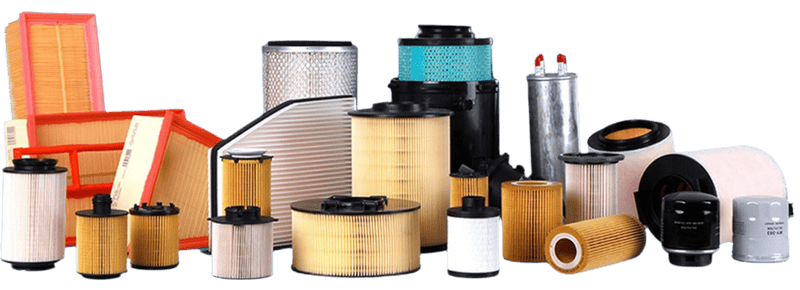
- Extensive Application Catalog: Over 2,000 active filtration SKUs spanning oil, fuel, engine air, and cabin air configurations for all major European passenger and commercial vehicle platforms, with full OEM and cross-reference number support.
- Distributor-Focused Commercial Terms: Flexible MOQ baselines starting at 200 pieces per SKU for initial trial configurations, combined with factory-direct pricing to protect your market margins.
- Professional Private Label ODM/OEM Operations: An expert, in-house R&D engineering division dedicated to delivering custom housing designs, private brand label creation.
- Seamless Communication & Logistics: Experienced sales managers guaranteeing a less than 24-48 hour response window, alongside a proven track record of reliable container delivery to all major European sea terminals within standard 30-to-45-day windows.
Conclusion
Securing a premier filter production partner in China requires looking past basic price sheets. It demands a systematic evaluation of both corporate compliance records and real-world business ethics. By using the objective database checks, practical integrity pressure tests, and structured onboarding workflows outlined in this guide, you can eliminate weak suppliers and build a highly resilient, profitable supply chain for your European distribution business.
Partner with a Factory That Welcomes Your Due Diligence
Ready to optimize your supply chain? Contact the engineering team at Buket Auto Parts today to receive a free quotation and order your samples.