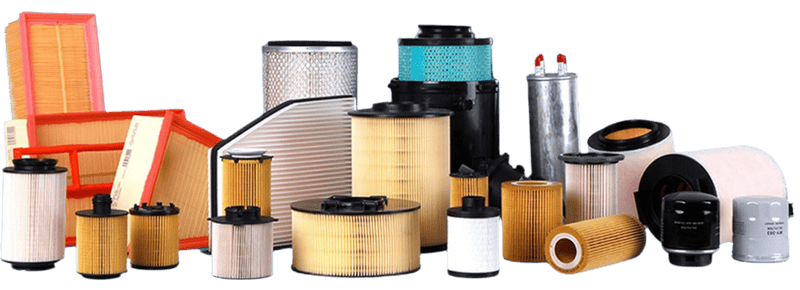
Knowing when and how to execute a timely cabin air filter replacement is one of the simplest yet most overlooked ways to preserve your driving comfort and protect your vehicle’s complex HVAC system. For owners of precisely engineered European vehicles, maintaining clean airflow isn’t just about comfort—it is vital to preventing premature wear on your climate control mechanics. This comprehensive guide details everything European car owners need to know about keeping their interior air pristine.
Why Cabin Air Filter Replacement Matters
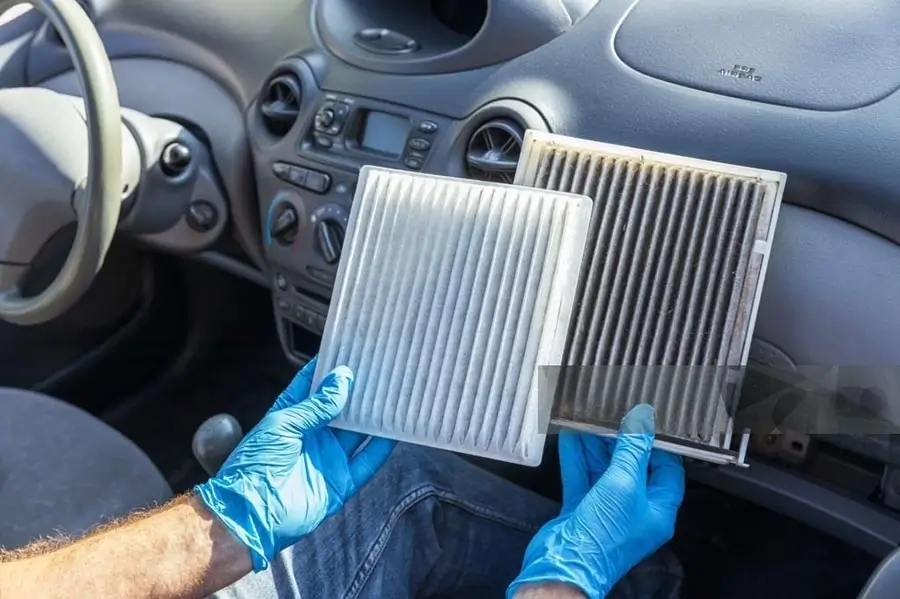
The cabin air filter serves as the primary barrier cleaning the raw air entering your vehicle’s passenger compartment. Over months of consistent driving, this media inevitably becomes choked with fine dust, seasonal pollen, toxic exhaust particles, and microscopic mould spores. Operating your vehicle with a heavily congested filter restricts clean airflow, drags external contaminants straight into the cabin environment, and burdens the HVAC blower motor with excessive backpressure.
For drivers navigating dense European urban centers, high-pollen rural highways, and rapidly shifting weather zones, routine replacement is a necessity. Upgrading to a premium component ensures that you, your family, and your passengers are protected from the fine particulate matter common on modern roads.
How Often Should You Replace Your Cabin Air Filter?
As a baseline standard, most European vehicle manufacturers advise a new installation every 15,000 to 30,000 kilometers, or at a bare minimum of once per calendar year. However, real-world driving variables often necessitate a shorter interval. You should consider accelerating your schedule if any of the following apply:
- You regularly commute through bumper-to-bumper city traffic with elevated exhaust concentrations.
- You reside in geographical regions prone to heavy agricultural or tree pollen blankets during spring and summer.
- Your routine routes involve unpaved, gravel, or exceptionally dusty road networks.
- The vehicle’s air conditioning or heating system operates continuously across changing seasons.
- Passengers suffer from chronic allergies, asthma, or other sensitive respiratory conditions.
Signs That Your Cabin Air Filter Needs Replacement
Your vehicle will typically display clear warnings when its internal filtration media has reached its structural capacity. Keep an eye out for these common symptoms:
- Diminished Vents Velocity: A noticeable drop in total airflow from your dashboard vents, even when you crank the fan speed to maximum.
- Persistent Unpleasant Odors: A distinct musty, stale, or damp smell wafting through the interior cabin whenever the HVAC system initiates.
- Slow Defrosting Cycles: Excessive, stubborn condensation or fogging gathering on the interior glass surface of the windscreen during cool mornings.
- Airborne Micro-particles: Visible flecks of dust, soot, or small plant debris blowing directly from the ventilation grilles.
- HVAC Auditory Strain: Unusual humming, whistling, or deep straining noises originating behind the dashboard or glovebox area due to air starvation.
How Much Does Cabin Air Filter Replacement Cost?
The total investment for a replacement varies based on your car’s specific make and the engineering design of the filter media. Basic particle-only filters are highly economical, whereas multi-layered activated carbon cabin filters equipped with gas and odor-absorbing compounds command a modest premium. For most luxury or standard European models, a reliable, high-tier aftermarket filter typically costs between €15 and €50.
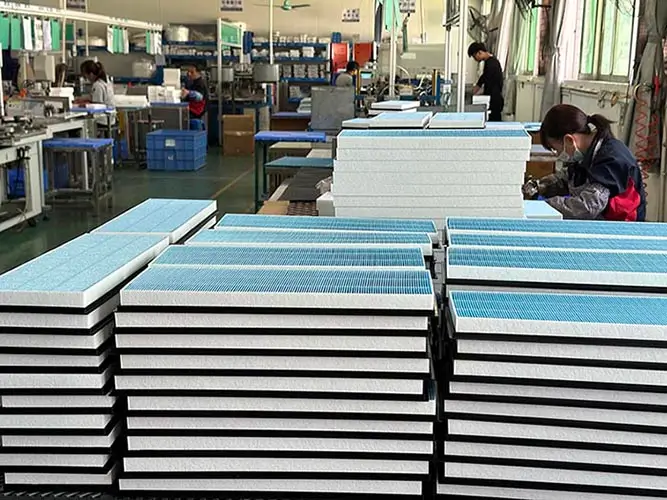
As an industry-leading manufacturer, Buket Auto Parts supplies premium OEM-matching automotive filters at aggressive factory-direct wholesale pricing to international distributors, repair facilities, and trade workshops. Our comprehensive catalog spans standard particle media, dense activated carbon configurations, and specialized biofunctional filters engineered with advanced anti-microbial coatings to neutralize allergens instantly.
Step-by-Step Cabin Air Filter Replacement Guide
For most European applications, updating this component is a highly manageable task. Follow these standard technical steps for a smooth installation:
- Expose the Filter Housing: Consult your vehicle’s technical manual. The housing is typically positioned directly behind the primary glove box compartment, tucked underneath the passenger-side dashboard, or accessed externally at the base of the front windscreen.
- Disengage the Access Panel: Gently unclip or unscrew the securing fasteners holding the protective filter structural cover in place.
- Extract the Spent Element: Carefully slide out the old filter. Take a precise mental or visual note of the integrated directional airflow arrows stamped on the casing to ensure you match the original orientation.
- Sanitize the Internal Housing Chamber: Use a narrow vacuum attachment or microfiber cloth to thoroughly clear out trapped organic leaves, loose debris, or accumulated dust settled in the bottom of the housing compartment.
- Seat the Fresh Filter Element: Insert your premium new replacement unit smoothly, making sure the printed airflow direction arrows point exactly the same way as the system’s structural flow.
- Reinstall the Security Panel: Click the access cover securely back into position and re-fasten any screws or clips firmly.
- Perform an Operational Test: Fire up the vehicle’s ignition and cycle the climate control fan through low, medium, and maximum velocities to verify unrestricted, balanced air delivery.
FAQ: Cabin Air Filter Replacement
Can I replace the cabin air filter myself?
Absolutely. For the vast majority of consumer vehicles, executing a cabin filter replacement is an incredibly straightforward, tool-light DIY project. Reviewing your vehicle’s factory handbook will highlight the exact orientation and layout details required for your model variant.
Is it strictly necessary to replace the cabin air filter every single year?
An annual swap is considered the safest baseline rule for normal commuting. However, if you spend considerable time driving through heavily congested industrial zones, large European metro corridors, or countryside routes with heavy seasonal crop cycles, upgrading the component every six months is highly advantageous for long-term health.
What is the core difference between a standard particle filter and an activated carbon cabin filter?
Standard particle variants focus solely on trapping physical elements like windblown dust, soot, and raw plant pollen. An activated carbon cabin filter features an additional embedded layer of treated charcoal that chemically adsorbs dangerous gas molecules, traffic fumes, pungent odors, nitrogen oxides (NOx), and ozone (O3). For modern city driving, carbon-infused options offer vastly superior protection.
Does an old cabin air filter affect my car’s fuel economy?
It does, albeit indirectly. When an automotive filter becomes fully choked with debris, the HVAC system’s electric blower motor is forced to work substantially harder to draw air through the restriction. This places an elevated electrical load on your car’s alternator, compelling the engine to burn additional fuel to compensate for the constant power draw.
Seeking a reliable, large-scale supply partner for your automotive filter retail or distribution network?
Connect directly with the expert export team at Buket Auto Parts today to request custom wholesale pricing schedules across our complete multi-tier filtration catalog. Backed by over 2,000 active SKUs tailored carefully to fit major European, Asian, and American passenger vehicle platforms, we stand ready to empower your independent aftermarket business operations.