Why Choosing the Right Auto Filter Supplier Matters
- Warranty and after-sales costs: Defective filters trigger customer complaints and replacement claims
- Brand reputation damage: Consistent quality issues erode customer trust in your brand
- Supply chain disruption: Late deliveries or production halts cause stockouts and lost sales
- Compliance risks: Non-certified products may fail market access testing in regulated regions
10 Core Criteria to Evaluate an Automotive Filter Supplier
Use these 10 standardized criteria to systematically compare and screen potential suppliers, rather than making decisions based on price alone.
1. Production Qualifications & Industry Certifications
- ISO 9001 quality management system certification
- IATF 16949 automotive industry quality system certification
- Product compliance certificates for your target market (CE for EU, etc.)
Beware of suppliers who only show printed certificates without valid audit records or third-party verification.
2. In-House Production Capacity
- Owns complete production lines from filter paper processing to finished product assembly
- Has in-house tooling and mold development capability for custom products
- Can provide factory photos, workshop videos and live video inspection services
3. Quality Control Systems
A disciplined factory maintains strict, multi-stage quality control parameters across every shift:
- Incoming Raw Material Auditing (IQC): Verifying the base weight, tensile strength, and burst thresholds of filter papers, cured polyurethane, and rubber gaskets before production begins.
- In-Process Control (IPQC): Continual automated sampling of pleat geometry, dimensions, and adhesive distribution on active lines.
- Finished Good Verification (FQC): leakage tests, filtration efficiency tests and appearance inspection before shipmentAsk for their acceptable defect rate target and quality dispute handling policy.
4. OE Cross-Reference Database Accuracy
For aftermarket filter distributors, accurate part number matching is critical to avoid fitment errors and returns. A reliable supplier should:
- Maintain a regularly updated cross-reference database covering thousands of OE numbers
- Support fast lookup by OE number, vehicle model or brand
5. Product Range & Category Coverage
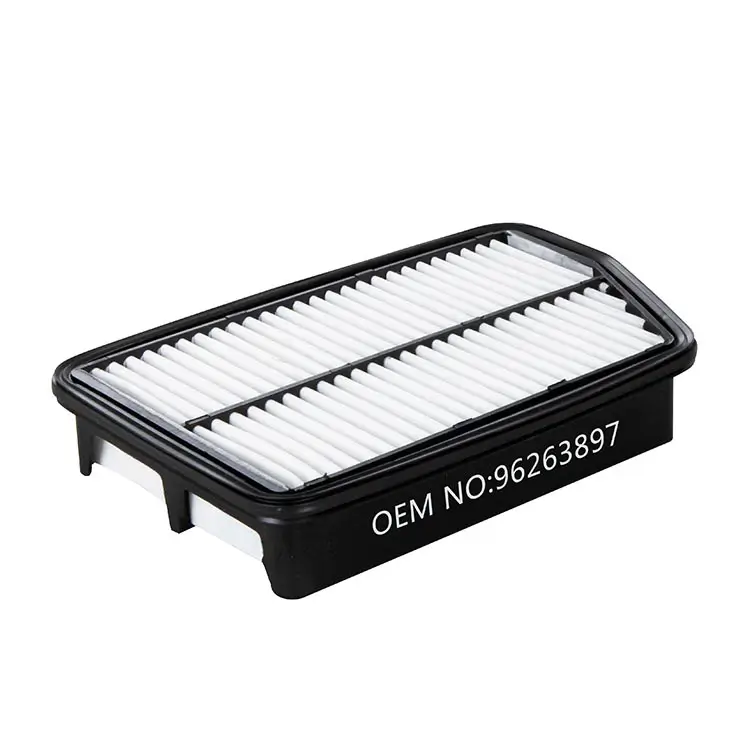
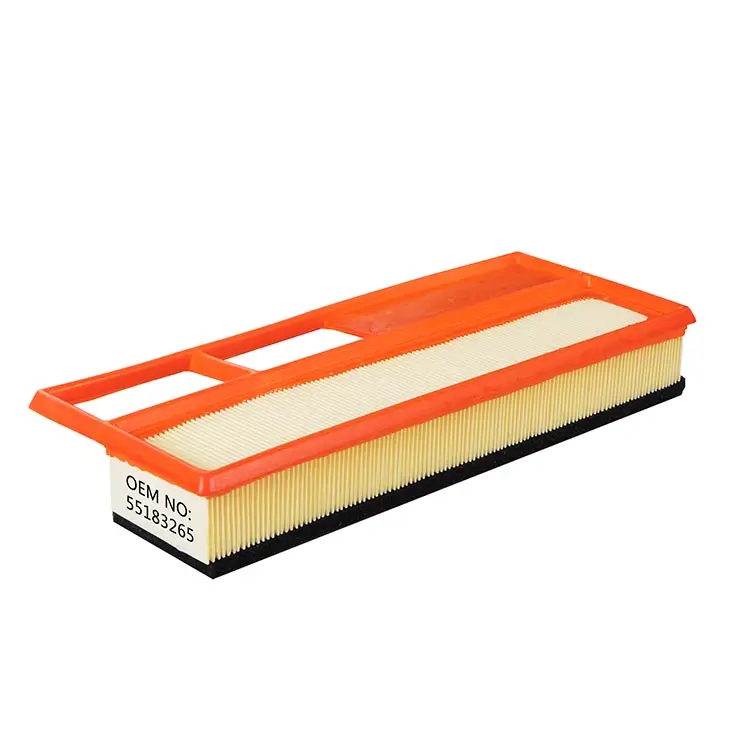
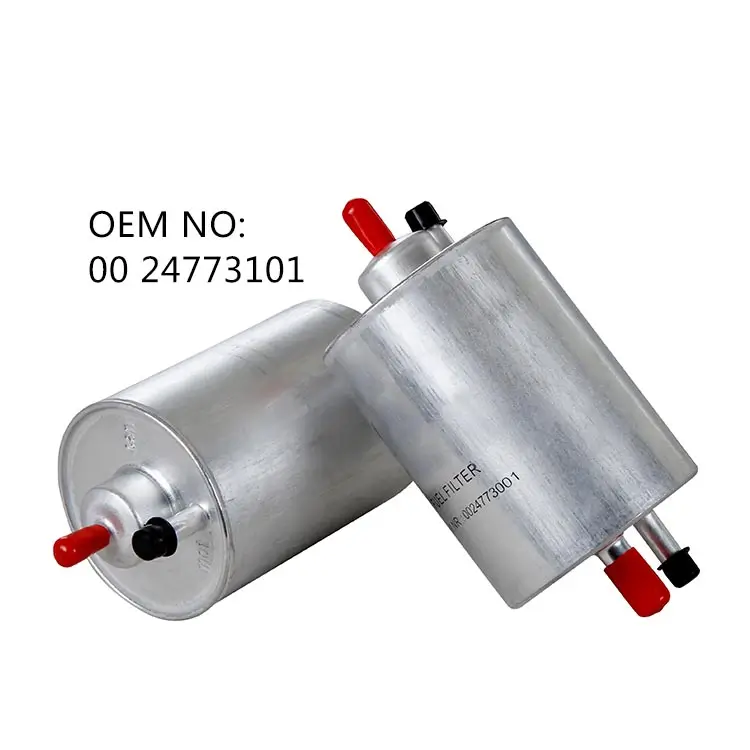
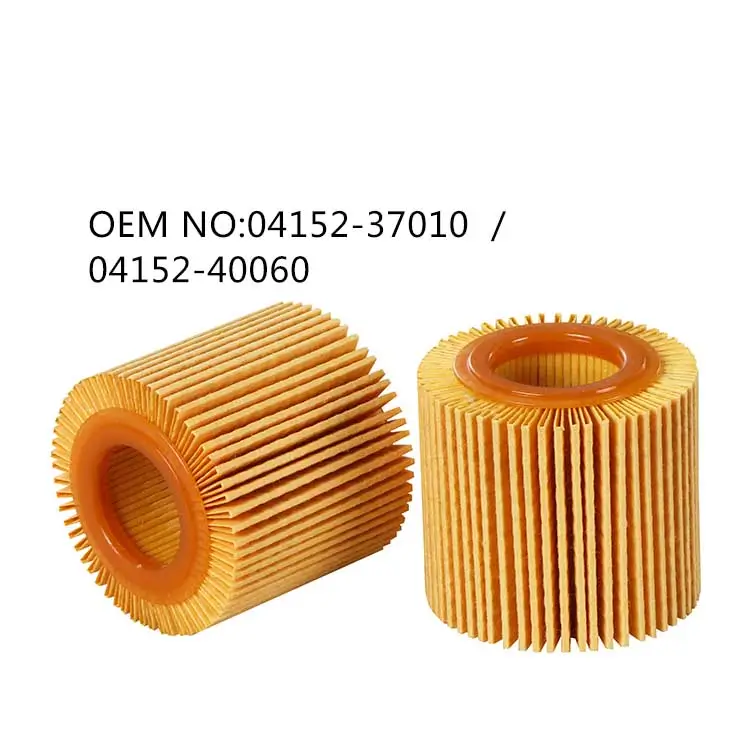
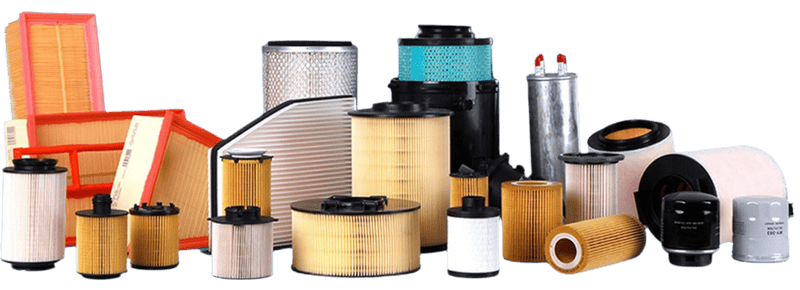
A strong supplier should cover core categories including oil filters, fuel filters, cabin air filters, engine air filters and filter paper materials, with options for passenger cars, commercial vehicles and industrial applications.
6. Strategic MOQ Tiering and Flexibilities
- Lower MOQ for standard stock models (usually 100 pieces per SKU)
- Moderate MOQ for OEM branded orders (usually 500 pieces per model)
- Support for mixed SKU orders to fill full containers and optimize shipping costs
7. Production Output Scale & Delivery Commitments
Stable on-time delivery is critical for inventory planning. Key indicators:
- Clear monthly output capacity for each product category
- Standard mass production lead time (typically 25 – 35 days for regular air filter orders, 35 – 45 days for regular fuel filter or oil filter orders )
- Expedited production options for urgent replenishment ordersTrack record of on-time delivery rate above 95%
8. Advanced Private Label OEM / ODM Capabilities
- Private label printing / stamping on products: includes high-resolution inkjet printing on the filter canisters, custom branding on end-caps
- Custom packaging design and production
- Product specification customization and engineering support for building custom component molds
- Dedicated project manager for OEM orders
9. Direct Engineering & After-Sales Support Channels
- Fast response to technical inquiries and cross-reference requests
- Clear after-sales claim handling process with defined response time
- Engineering support for product quality issues and application consulting
10. Regional Market Experience & References
- 8+ years of automotive filter production experience
- Export experience to your target regional market
- Verifiable client references or cooperative brand cases
- Positive feedback on quality, delivery and service
Selection Priorities for Different Automotive Business Models
The ideal supplier profile varies by business model. Focus on these priorities based on your company type:
| Business Classification | Primary Vetting Focus | Secondary Vetting Focus | Typical need |
|---|---|---|---|
| Auto Parts Aftermarket Distributors & Wholesalers | wide product range, accurate cross-reference database, stable delivery, MOQ flexibility | OEM capability, technical support | One-stop catalog consolidation to minimize inbound freight costs. |
| Private Label Brands & OEM Clients | R&D capability, custom tooling support, private labeling service, strict quality control | mass production capacity, certification compliance | reliable partner to co-develop products and build brand identity |
| Auto Repair Chains & Maintenance Networks | consistent quality, stable supply, competitive pricing, fast delivery | product training support, packaging suitability for retail | reliable daily supply with low defect rates and strong shelf appeal |
| Industrial & Heavy Equipment Operators | industrial-grade product performance, pressure resistance testing, heavy-duty product range | custom specification capability, on-site technical support | high-reliability filters for harsh operating environments |
5 Vital Checkpoints During On-Site or Virtual Factory Audits
If you conduct on-site or virtual factory audits, focus on these 5 high-impact checkpoints to quickly assess real capability:
- Raw material warehouse: Verify material storage conditions, supplier labels and batch traceability records
- Production workshop: Check equipment condition, production process standardization and worker operation norms
- Quality control lab: Confirm existence of filtration efficiency testers, pressure test benches and inspection records
- Finished product warehouse: Check packaging standards, batch identification and inventory management systems
- Document management: Verify validity of certificates, production records and quality inspection reports
Common Pitfalls to Avoid When Sourcing Auto Filters
To keep your operations lean and profitable, protect your business against these frequent sourcing mistakes:
- Choosing by price only: Bottom-dollar pricing is a reliable indicator of low-grade, porous papers, thin metal shells, and cheap rubber gaskets that harden and leak under high temperatures and hidden quality risks
- Overlooking MOQ details: Confirm MOQ applies per model or per order to avoid unexpected minimum requirements
- Ignoring sample verification: Always test samples before placing bulk orders to verify fitment and performance
- Unclear trade terms: Confirm FOB, CIF or DDP terms in advance to avoid hidden logistics costs
- No written quality agreement: Formalize quality standards, defect rate limits and claim terms in your contract
Why Buket Auto Parts Stands Out as a Trusted Filter Supplier
- Full product range: Complete catalog of oil filters, fuel filters, cabin air filters, engine air filters, hydraulic filters and automotive filter paper
- Strict quality control: All products comply with ISO 9001 and IATF 16949 quality management system standards
- Flexible cooperation: Low MOQ for stock models, full OEM/ODM support and mixed container ordering
- Stable delivery: Monthly output of over 3 million pieces with 97% on-time delivery rate
- Professional support: Dedicated account managers and technical engineers for every partner
Frequently Asked Questions
What is the core difference between an auto filter manufacturer and a trading company?
A factory owns the physical facilities, raw material inventories, and production machinery, giving them direct control over production schedules, custom branding options, and base pricing. A trading company acts as a middleman between buyer and factory, with higher costs and limited control over quality and lead time.
How can our team verify the validity of an auto filter manufacturer’s certificates?
Ask for the certificate number and issuing body, then verify through the official certification organization website. And confirm the registration is active and matches the factory’s corporate name.
What are the most critical inspection points when assessing filter samples?
Focus on verifying exact dimensional matching across casing threads and outer gasket lines. Additionally, check the flexibility and resilience of the rubber seals, verify clean, uniform pleat spacing, and confirm the internal bypass and anti-drainback valves function smoothly under pressure.
Can I place a small trial order first?
Yes, most reliable suppliers accept small trial orders for quality evaluation, though unit prices may be slightly higher than bulk orders. Trial orders are strongly recommended before committing to large volume purchases.
Get Started with Your Sourcing Project
Whether you are looking for a wholesale filter supplier, an OEM manufacturing partner or want to audit our factory, our team is ready to support you.
- Request product samples for quality evaluation
- Get a detailed quotation for your required part numbers and quantities
- Schedule a live virtual factory tour or on-site visit